An international move is rarely just a change of address. It is a turning point – professionally, personally, often both at once. And between visa, handing over the flat and farewell dinners, there is little capacity left for the question of which customs forms the destination country requires, or whether your household goods are better off travelling by container or by air.

This is where we come in. Under the long-established KRUMPF name, HANSETRANS brings all international moving activities together under one roof: from Germany to the world and back. We take care of planning, professional packing, transport by the most suitable route, complete customs clearance and delivery to your new home.

Throughout, you have one dedicated contact person. Everyone else involved – shipping lines, customs agents, partners at the destination – we coordinate in the background.
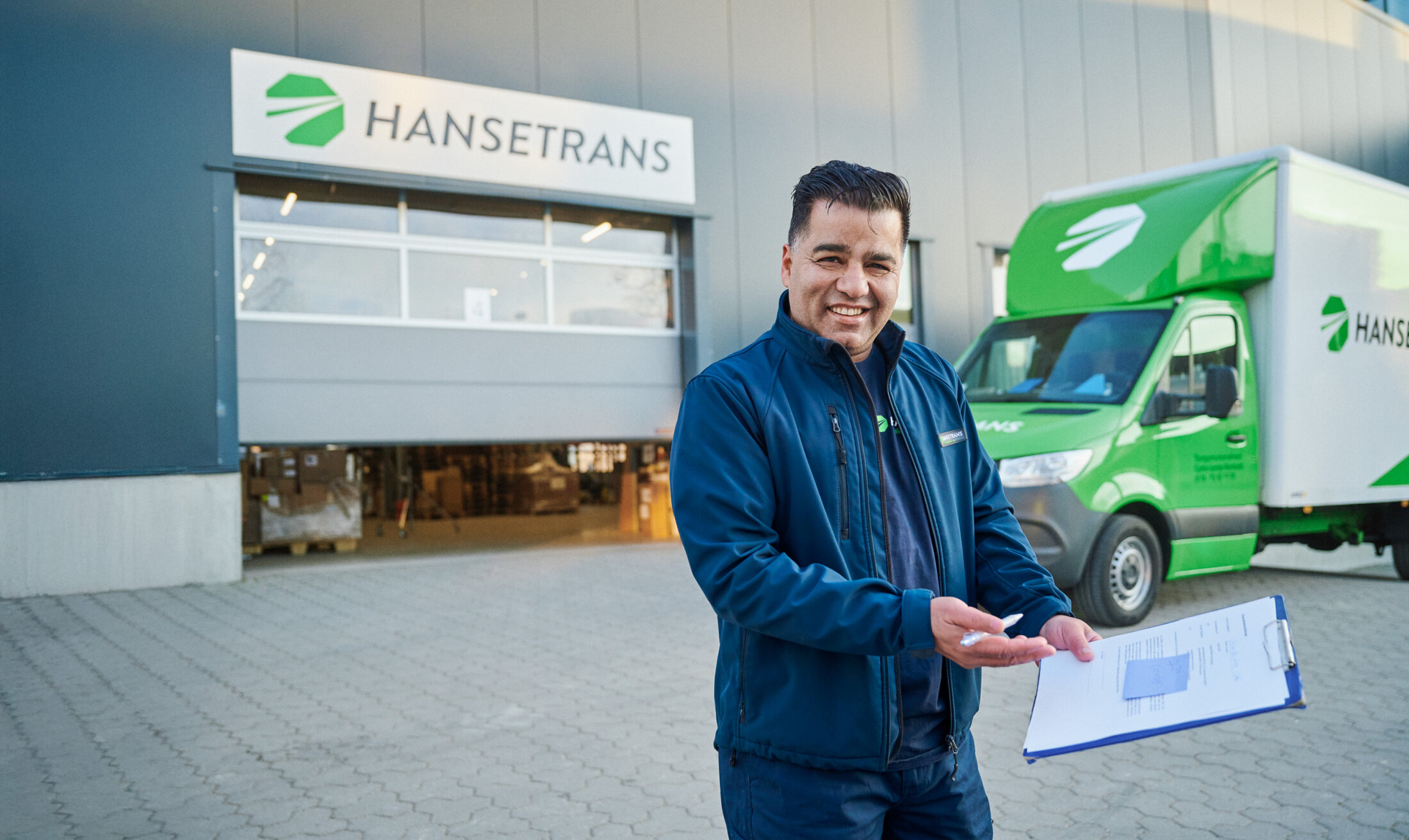
Lächelnder Zusteller mit Klemmbrett vor einem HANSETRANS-Lager und einem Lieferwagen mit Markenlogo, bereit, Ihnen bei Ihrem Privatumzug zu helfen.

International moving in brief

  • Worldwide reach: full service within Europe by truck, plus overseas transport by sea and air freight.
  • Customs included: we prepare the documents, coordinate with the authorities and prepare the import of your household goods.
  • Everything from one source: export-standard packing, car shipping, transit insurance, furniture assembly at the destination.

Jump straight to your topic

Moving within Europe by road

Dedicated truck or part load

Overseas moving by sea freight

FCL or LCL

Express by air freight

Your Timeline at a Glance

Customs & documents

Which Documents Do I Need Where?

Vehicle shipping

Ro-Ro or container

Frequently asked questions

International moving

Looking for records storage and archiving?

If your concern is not private or commercial household goods but the audit-proof storage and management of your business records, you will find the right department here: → Records logistics & archiving

Organising a relocation abroad for your employees?

For HR departments and assigned employees we have a dedicated page: → Employee relocation abroad

Almost a Century of International Moving – KRUMPF and HANSETRANS

Since 1937, the KRUMPF name has stood for worldwide moving of the highest standard. In that time our teams have handled around 25,000 international moves – from a single container to Canada to a complete household, classic car included, bound for Australia.

At HANSETRANS we continue this tradition. Since 2025 the KRUMPF name has been part of HANSETRANS, and we bring all international moving activities together under one roof. For you this means one thing above all: you benefit from the KRUMPF team’s decades of international experience and, at the same time, from the infrastructure of one of the largest moving groups in northern Germany.

Our long-standing customers value this combination of experience, reliability and modern service quality – and rely on the strength of two brands that together stand for seamless international moves.

Containerschiff aus der Vogelperspektive auf See

Audited Quality – Worldwide, Not Just in Hamburg

With an overseas move, you hand over your belongings for weeks. At the destination, a team you have never met opens the container. That is precisely why trust alone is not enough – it should be verifiable.

Our memberships and certifications are not an end in themselves. They are the basis for work in Sydney or Vancouver being carried out to the same standards as the loading outside your front door:


  • FIDI Global Alliance with FAIM Plus certification – the international quality standard for international movers. It is verified through regular independent audits and serves worldwide as the entry ticket to a network of movers audited to the same standard.
  • IAM (International Association of Movers) – global industry association focused on international compliance and audited network structures.
  • AMÖ – Bundesverband Möbelspedition und Logistik – the quality association of the German moving industry.
  • ISO 9001 and ISO 14001 – certified quality and environmental management, documented and regularly audited.

What this means for your move:

  • At the destination, you are served by a partner whose quality we can prove – not the cheapest local provider
  • Your goods are packed and documented to internationally uniform standards
  • If questions arise, you have access to complete documentation, from the inventory list to the handover report
  • In the event of damage, responsibilities are clearly defined

Your Move Abroad – All Services at a Glance

You decide which building blocks you need. We put your move together modularly – from transport only to the complete all-inclusive package.
Consultation & Planning

Survey by video or at your home, precise volume assessment, transparent calculation. The result is a comparable quote, not a rough estimate.

Packing & Inventory

Export packing to international standards, detailed inventory list for customs, special crating for pianos, art and antiques.

Your Transport Route

By truck across Europe, by sea freight in your own or a shared container, by air freight for anything urgent – or as a combination of several routes.

→ To the transport routes

Customs & Documents

Complete handling in the country of departure and destination, preparation of the import, our own bonded warehouse in Hamburg if delivery is delayed.

→ To the customs section

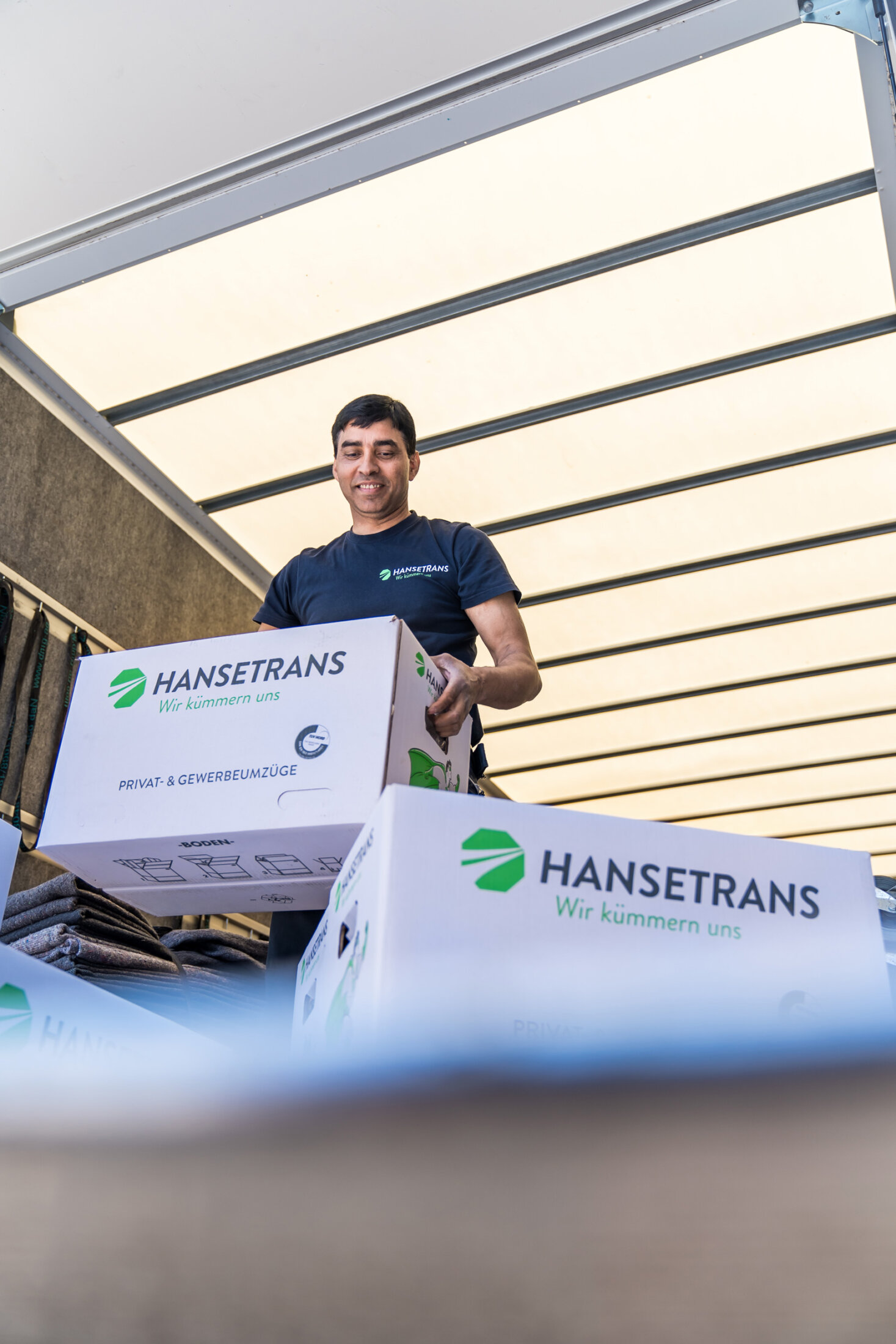
Ein lächelnder Möbelpacker im HANSETRANS-Shirt lädt beschriftete Kartons in einen Umzugswagen.

Arrival & Assembly

Delivery, placement and furniture assembly at the destination. On request, we take the packing material straight back with us.

Moving Within Europe by Road – Across Borders, Without Hurdles

Within Europe, many formal borders have disappeared – the logistical ones remain. Different access rules, narrow old-town streets, varying procedures for parking permits and, in some countries, customs obligations just like an overseas move: a move within Europe can be planned, but it should not be taken for granted.

We carry out your move anywhere in Europe and know the regional particularities of the destination countries – whether your new home is in Scandinavia, southern Europe or eastern Europe.
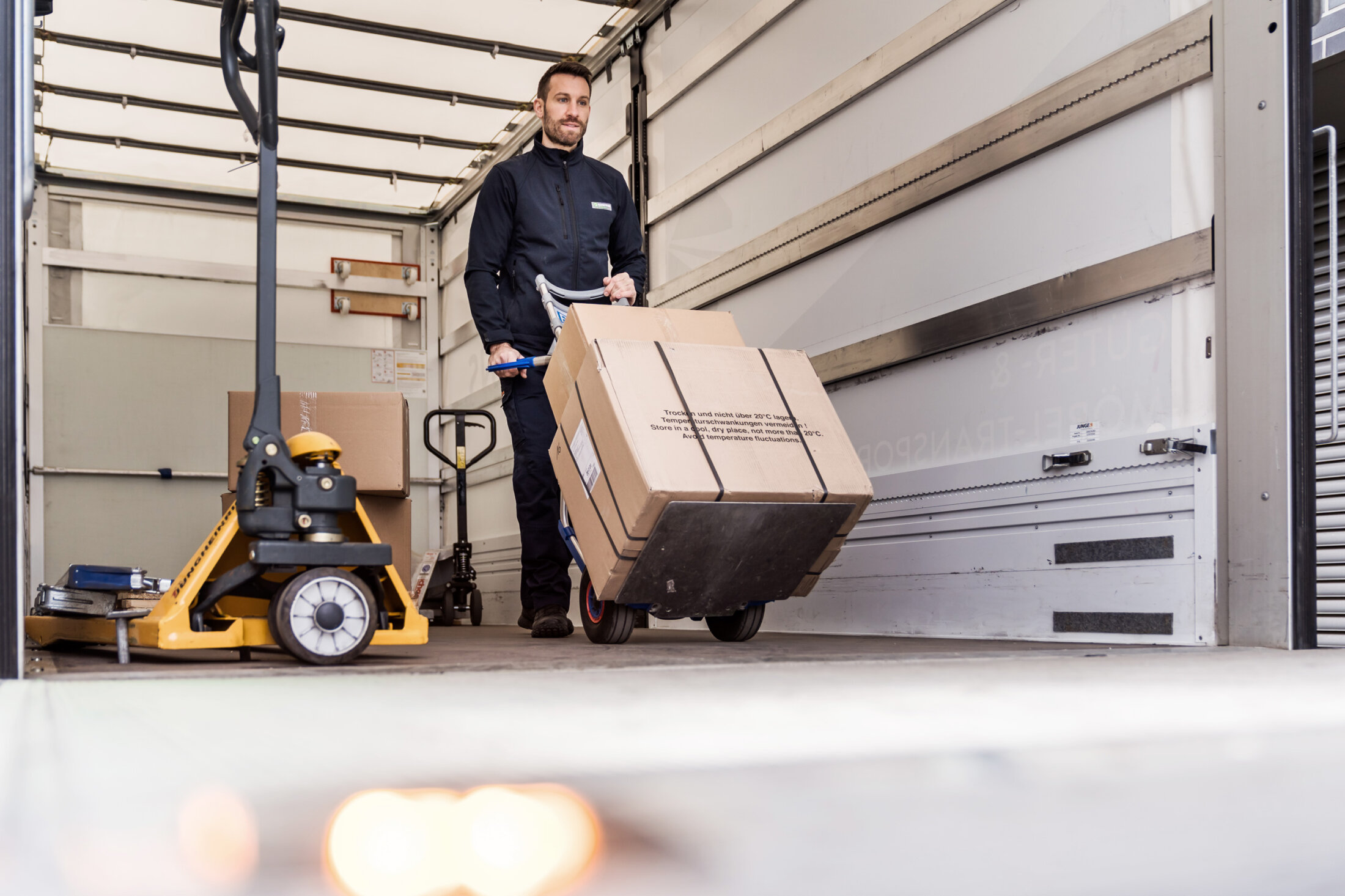
Lächelnder Mann, während er Kartons auf einen Wagen in einem Lieferwagen von HANSETRANS lädt.

Dedicated Truck or Part Load – Which Suits Your Move?

The biggest cost lever in a European move is not the distance but the question of whether you use the truck on your own:

Dedicated truck Part load ( groupage )
Process Your goods travel door to door without reloading Your goods use spare capacity on a journey that is already scheduled
Date Fixed delivery date agreed with you Delivery window, depending on route planning
Cost Higher – you pay for the whole vehicle Considerably cheaper – you share the transport costs
Ideal for Complete households, fixed handover dates Individual pieces of furniture, partial moves, students, second homes

Dedicated truck

Process
Your goods travel door to door without reloading
Date
Fixed delivery date agreed with you
Cost
Higher – you pay for the whole vehicle
Ideal for
Complete households, fixed handover dates

Part load ( groupage )

Process
Your goods use spare capacity on a journey that is already scheduled
Date
Delivery window, depending on route planning
Cost
Considerably cheaper – you share the transport costs
Ideal for
Individual pieces of furniture, partial moves, students, second homes

Transit Times and Process

Within Europe your goods are usually in transit for a few days to a week – longer with a part load, because the route includes further stops. During the peak season between May and September, allow several weeks’ lead time between survey and collection. These figures are averages based on our experience; individual cases may differ.

Disclaimer: The figures given are averages. Individual cases may differ.

Note for destinations outside the EU: despite the short distance, full customs and import regulations apply to Switzerland, the United Kingdom, Norway and the Balkan states – since Brexit, also to the UK. We prepare the paperwork and declare your household goods. → More on customs clearance

For your European move we take care of:

  • Survey by video or in person and precise volume assessment
  • Professional packing including packing service – for insurance reasons our teams always do the packing; on request we also unpack at the destination
  • Dismantling and reassembly of your furniture by trained fitters
  • No-parking zones at the loading address; in the destination country via partners we put you in touch with
  • All formalities relevant to the move

Overseas Moving by Sea Freight – to Every Continent

If your destination is on another continent, sea freight is the most economical route. Your household goods travel in a removal container – either exclusively or together with other consignments. We steer your overseas move through every stage: from packing in your old home to loading at the port and delivery in the destination country.
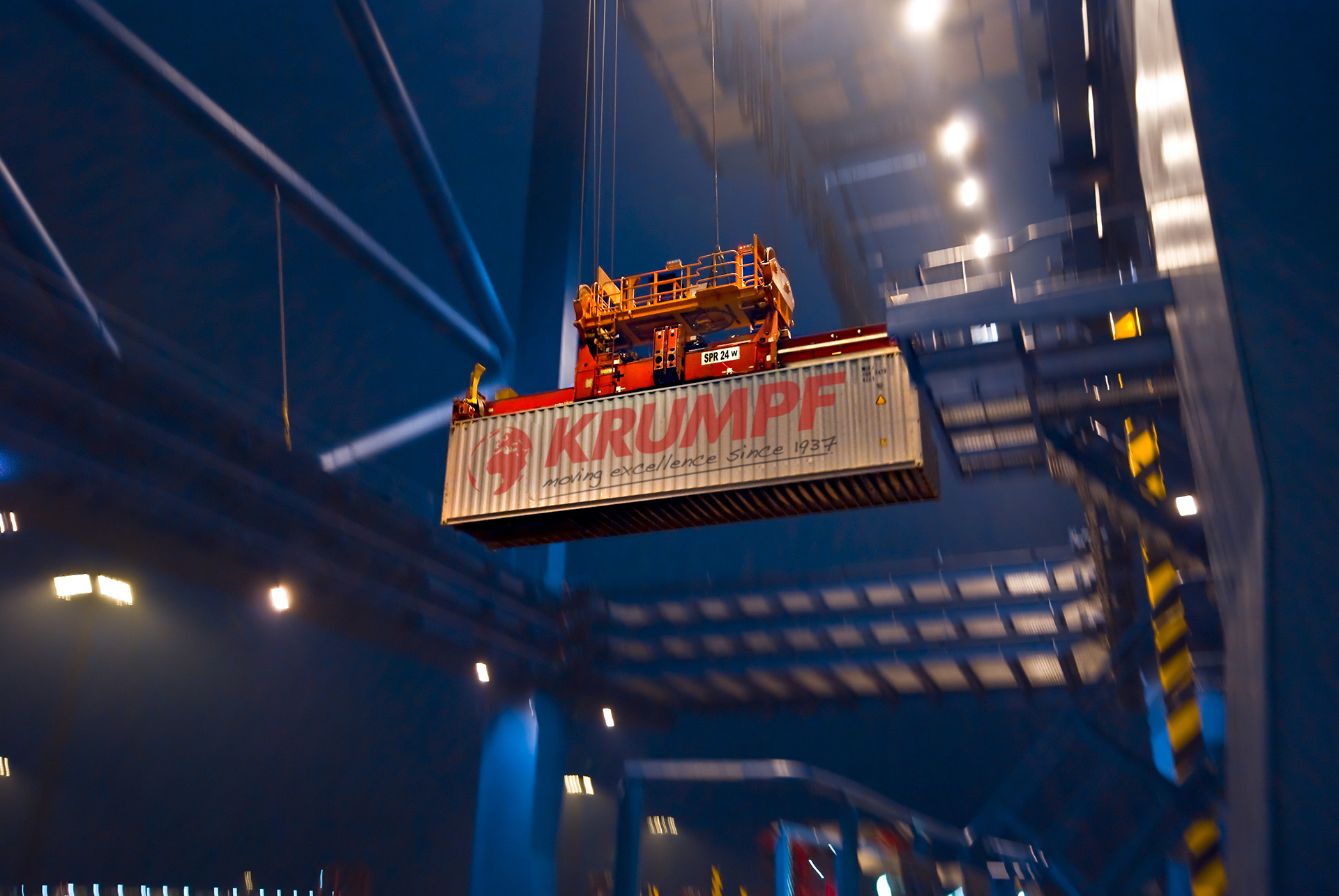
Ein Schiffscontainer wird nachts auf einem Industriegelände von einem Kran angehoben. Dies zeigt die Effizienz von HANSETRANS als professionelles Umzugsunternehmen bei der Abwicklung schwerer Umzüge auch nach Einbruch der Dunkelheit.

FCL or LCL – Your Own Container or a Shared One?

FCL (Full Container Load) means: a container is yours alone. It is loaded at your home, sealed and not opened again until it reaches the destination. This is the fastest and safest route – ideal for complete households.

LCL (Less than Container Load) is the economical solution for smaller volumes. Your goods are packed into a sturdy wooden crate – the so-called liftvan – and shipped with other consignments in a consolidated container. You pay only for the volume you actually need, but should allow a little more time.

Which Container Suits Your Household?

Depending on the size of your household, we select the right container type:

Container type Volume ( approx .) Roughly equivalent to
20-foot standard 30 m³ 2- to 3-room flat
40-foot standard 64 m³ Detached house, or flat plus car
40-foot high cube 74 m³ Large detached house, extra stacking height

We make the exact assessment during the survey – experience from thousands of overseas moves is more reliable here than any online calculator.

How Long Does the Sea Route Take?

The pure transit time at sea depends on the destination port and the route:

  • USA and Canada: approx. 2 to 4 weeks
  • Asia: approx. 5 to 8 weeks
  • Australia: approx. 10 to 12 weeks
  • South America and Africa: 3 to 7 weeks depending on the port

Add to this the pre- and on-carriage and customs clearance in the destination country – allow an additional one to two weeks for each. With an LCL shipment, there is also the waiting time until the consolidated container is loaded. These figures are averages based on our experience; individual cases may differ. Transit times depend on the route and the shipping line and are currently subject to change at short notice. We will state the current estimate for your destination in your quote.

Disclaimer: The figures given are averages. Individual cases may differ.

Packing for the Sea Route

A container goes through temperature changes, humidity and the motion of the sea. That is why we pack to export standard: furniture protected against moisture and pressure, delicate items such as pianos, works of art or antiques in custom-made wooden crates. We build these ourselves or source them from specialist partners; crates from a previous move are gladly reused. Every package is numbered and recorded in the inventory list – the basis for customs and insurance alike.

Everything from one source, door to door:

we collect your goods, pack, ship, clear customs in the destination country and deliver to your new home. One contact person for the entire chain, one quote covering every stage.

Air Freight – the Express Solution When Time Is Short

Some things cannot spend weeks on a ship. Work clothes for the first day in the new job, the cot, the laptop, important papers, the basics for the first few weeks: if your new life has already begun while the container is still at sea, air freight is an option.

With our door-to-door service, your goods reach the destination by air in around 14 days – including collection, customs clearance and delivery to your new home. These figures are averages based on our experience; individual cases may differ.

Disclaimer: The figures given are averages. Individual cases may differ.

Air Freight or Sea Freight – Which Is the Right Choice?

Criterion Sea freight Air freight
Duration ( door to door ) approx . 4 to 16 weeks approx . 14 days
Cost Cheaper for large volumes Higher per m³, efficient for small quantities
Pricing basis By volume By volumetric weight
Handling points Several Minimal
Suitable for Complete household , furniture Priority items, clothing, documents, electronics

The durations shown are averages based on our experience; individual cases may differ.

Disclaimer: The figures given are averages. Individual cases may differ.

For most private moves, sea freight alone is sufficient. If you need specific items in the first few weeks, a compact starter package by air can bridge the time until the container arrives – for cost reasons, this is usually limited to the essentials. Your household goods travel by sea; the starter package flies ahead.

What Does an Air Freight Move Cost?

Costs depend on volumetric weight and destination. As a guide: for around 2 cubic metres – roughly 15 to 20 standard boxes of personal effects – the total cost including handling is usually between €2,500 and €3,000. The range results from distance, the current fuel surcharge and the scope of service you choose. You will receive your specific quote after the volume assessment.

Disclaimer: The figures given are averages. Individual cases may differ.

Safety in Air Transport

Short transit times and few handling points mean less strain on your property. We pack to IATA standards and use standardised air freight containers or air pallets for larger shipments. One note in advance: stricter rules apply in air freight than at sea to lithium-ion batteries, sprays, paints and similar goods – we check your list beforehand and tell you what can fly.

Your Timeline at a Glance

This timeline reflects averages based on our experience; individual cases may differ.

Disclaimer: The figures given are averages. Individual cases may differ.

Customs and Documents – Your Smooth Border Crossing

When moving to a country outside the EU, the paperwork decides whether your household goods are released promptly or sit in the port for weeks – with demurrage charges that quickly run into four figures. We handle complete customs clearance in the country of departure and destination and prepare your documents so that your goods are classified as household effects for a transfer of residence.

What Does „Duty-Free Household Effects“ Mean?

Most countries allow used household goods to be imported free of duty and tax if you are genuinely transferring your residence. The conditions are similar worldwide:

  • You provide proof of the transfer of residence – for example an employment contract, tenancy agreement or visa
  • The items have been in your possession for a certain period, usually six to twelve months
  • You declare your household goods completely and truthfully
  • You do not sell the imported items within a restriction period

New purchases, vehicles and valuables are often subject to different rules. We check the specific regulations of your destination country before the first box is packed.

Which Documents Do I Need Where?

Destination Key documents
Switzerland Customs declaration for household effects, confirmation of residence, tenancy or employment contract, inventory list
United Kingdom ToR number (Transfer of Residence), proof of transfer of residence, inventory list
USA Customs declaration for household effects, copy of passport, visa, detailed declaration of value, inventory list
Canada Customs declaration for personal effects, proof of residence status, inventory list in duplicate
Australia Customs declaration for unaccompanied personal effects, proof of visa, quarantine declaration, inventory list

In every case, the inventory list is the central document – and the most common cause of delays. Collective terms such as „kitchen boxes“ are not enough; in some countries, electronics must be listed with serial numbers. We draw up the list together with you, in the language and format required. In some countries the list must also be notarised – we will point this out to you in good time.

What Is Not Allowed in the Container

Regardless of the destination, flammable liquids, gases, weapons and ammunition, untaxed tobacco products, larger quantities of alcohol and perishable food are prohibited. Plants, wooden furniture and natural materials are subject to strict quarantine rules in Australia, New Zealand and the USA. Here too, we check your list in advance – an objection at the destination port costs time and money.

Bonded Warehouse and Temporary Storage

The delivery date does not always coincide with customs release. For these cases we offer two solutions: in our own bonded warehouse in Hamburg we store your goods under customs seal, without import duties becoming due. In temporary storage your goods remain for up to 90 days; if it takes longer, we transfer the consignment to our open bonded warehouse with no time limit. This lets you safely bridge the time until all administrative requirements are met – for example if your visa is delayed or your new home is not yet ready to move into.

KRUMPF-Lager mit weißen Lagercontainern und gelbem Hallenkran.

Returning to Germany

The way back needs preparing too. When returning to Germany, similar customs rules apply as when moving abroad – we handle the process in this direction as well.

Vehicle Shipping Worldwide – from Everyday Car to Classic

For many people, an international move does not end with the furniture. Their own vehicle is often more than a means of transport: the car they spent years working on, the classic from the garage, the car they will need from day one in the new country. We organise worldwide shipping – including all customs formalities for export and import.

Ro-Ro or Container – the Two Routes

Ro-Ro (roll-on/roll-off) is the most economical solution for roadworthy standard vehicles. Your car is driven onto a specialised car carrier and lashed down on one of the vehicle decks. For this it must be roadworthy and completely empty – for safety and customs reasons no additional load is permitted, not even spare parts in the boot.

Container shipping offers greater protection. Your vehicle stands in a closed container, protected from weather and unauthorised access, professionally lashed and secured with wheel chocks. For high-value vehicles, classics and non-runners, the container is the right choice.

Ro-Ro Container
Cost Cheaper Higher
Protection Vehicle deck, accessible to crew Sealed container , no access
Additional load Not permitted Possible by arrangement
Roadworthiness Required Not required
Ideal for Standard cars on main routes Classics, high-value and non-roadworthy vehicles

Shipping Vehicle and Household Goods Together

Combined shipping is particularly economical: your vehicle is secured in the front part of a 40-foot container, and the remaining space takes your household goods. This saves money compared with two separate transports – and ensures everything arrives at the same time. Instead of two customs clearances and two delivery dates, we coordinate a single process.

From Your Front Door to the Destination

We collect your vehicle from your home by specialist transporter, take care of port logistics, export and import permits, and deliver to your new front door. The fewer interfaces, the lower the risk – especially with vehicles whose value cannot simply be replaced.

A note on planning: import regulations for vehicles are considerably stricter than for household goods and vary significantly by country. Age limits, emissions standards and registration rules differ widely. We check in advance, from a customs perspective, whether your vehicle can be imported – ideally before you decide to take it with you.

How Your International Move Works

From the first enquiry to the assembled bedroom in your new home: our process has evolved over decades and is divided into three phases.

Your Checklist for Moving Abroad

Starting early saves money and nerves in the end. These three phases cover the most important steps:

Disclaimer: The figures given are averages. Individual cases may differ.

3–6 months before

  • Clarify residence status and visa
  • Initial volume estimate
  • Book a consultation
  • Check the import regulations of the destination country

8–12 weeks before

  • Decide on the mode of transport
  • Agree insurance cover
  • Register special items such as vehicles or pianos

2–4 weeks before

  • Prepare customs documents – some proofs only follow after arrival in the destination country
  • Confirm collection and delivery dates
  • Pack an arrival suitcase for the first two weeks

Frequently Asked Questions About International Moving

For an overseas move we recommend a lead time of three to four months, within Europe six to eight weeks. Most of this time is not spent on the transport itself but on preparation: visa and residence status have to be clarified, customs documents compiled and – depending on the destination – import permits obtained. Then there is the booking of shipping space, which on busy routes is done several weeks in advance. Between May and September you should allow extra buffer, because most moves take place in these months and both dates and capacity become scarcer. Moves at shorter notice are possible – but they limit the choice of the most economical transport routes.

Disclaimer: The figures given are averages. Individual cases may differ.

For a meaningful quote, yes: the precise volume assessment is the basis of every calculation, and an estimate from a distance would come either at your expense or at ours. We prefer to carry it out as a video survey via smartphone or tablet, or in person at your home if you wish. The video survey saves an on-site appointment, can be arranged at short notice and outside the usual hours, and is therefore particularly practical when your moving date is approaching or your daily routine leaves little room.

The basis is the volume in cubic metres, the transport route and the distance. Added to this are the packing effort, the customs formalities in the destination country and any additional services you request, such as vehicle shipping, interim storage or furniture assembly. As a rule of thumb: for larger volumes, sea freight is considerably cheaper than air freight, but takes much longer. After the survey you receive a quote that itemises all agreed services transparently.

Disclaimer: The figures given are averages. Individual cases may differ.

With FCL (Full Container Load), a container is at your exclusive disposal. It is loaded at your home, sealed and not opened again until the destination – this is the fastest and safest route and the usual choice for complete households. With LCL (Less than Container Load), your goods are packed into a sturdy wooden crate, the liftvan, and shipped together with other consignments in a consolidated container. You pay only for the volume you actually need, but should allow extra time, because the consolidated container has to be fully loaded first.

To the USA and Canada, the pure sea passage takes about two to four weeks, to Asia five to eight weeks and to Australia ten to twelve weeks. Within Europe, your goods usually travel by truck for a few days to a week. For overseas destinations, allow an additional one to two weeks for pre- and on-carriage and customs clearance in the destination country – with an LCL shipment, there is also the waiting time until the consolidated container is loaded. These figures are averages based on our experience; individual cases may differ. Transit times are currently subject to change at short notice – we will state the current estimate for your route in your quote.

Disclaimer: The figures given are averages. Individual cases may differ.

Most countries allow used household goods to be imported free of duty and tax if you can prove you are transferring your residence. Four conditions are usual: proof of the transfer of residence, a minimum period of ownership of the items of usually six to twelve months, complete and truthful declaration of the household goods, and a restriction period during which you may not sell the imported items. Different rules often apply to new purchases, vehicles and valuables. We check the specific regulations of your destination country before collection.

Excluded are flammable liquids, gases, weapons and ammunition, untaxed tobacco products, larger quantities of alcohol and perishable food. Plants, untreated wood and other natural materials are subject to strict quarantine rules in Australia, New Zealand and the USA and will be objected to at the destination port in the event of violations. Particularly strict rules apply to lithium-ion batteries in air freight. We check your inventory list in advance and tell you what can travel and what is better sold or disposed of beforehand.

Yes. Both countries are third countries for customs purposes – the United Kingdom since Brexit. For Switzerland you need, among other things, a customs declaration for household effects; for the UK a ToR number (Transfer of Residence), which must be applied for before import. In both cases, a detailed inventory list and proof of the transfer of residence are also required, for example via a tenancy or employment contract. The short distance is deceptive here: the administrative effort is equivalent to that of an overseas move. We prepare and submit these documents for you.

With container shipping, yes. A 40-foot container is usual, in which the vehicle is lashed and secured at the front while the remaining space takes your household goods. This is usually cheaper than two separate transports and ensures that vehicle and household arrive at the same time. With the cheaper Ro-Ro method, however, an additional load is ruled out – for safety and customs reasons the vehicle must be completely empty.

The statutory liability of a moving company for international transport is limited in amount and is based on volume, not on the value of your property. For a complete household, the actual value is almost always higher. We therefore offer you transit insurance: at replacement value or current value, or as total-loss cover that covers only major losses such as the sinking of the ship. We will gladly advise you on the scope of cover and the insured value, and on what you should document in case of a claim.

Let’s Talk About Your Move

No two international moves are alike – which is why every one of ours begins with a conversation, not a price calculator. Tell us where you are moving to and what should come with you. We will sort out the rest together.

You benefit from:

  • almost 90 years of experience with international moves
  • certified quality standards and audited partners worldwide
  • one dedicated contact person from consultation to handover
  • a transparent quote after the survey
Eine lächelnde Person mit roten Haaren telefoniert über den HANSETRANS Umzugsservice und arbeitet dabei in einem modernen Büro an einem Laptop.

Your direct line

International Moving Department
KRUMPF International Department

Organising moves for your employees?

For HR departments – and for employees who are themselves being assigned abroad – we have a dedicated page: with a dedicated contact person, a standardised process and quotes in line with your relocation policy. → Employee relocation abroad

Do you have any questions?
Please contact us!